By:Dominic La-Viola
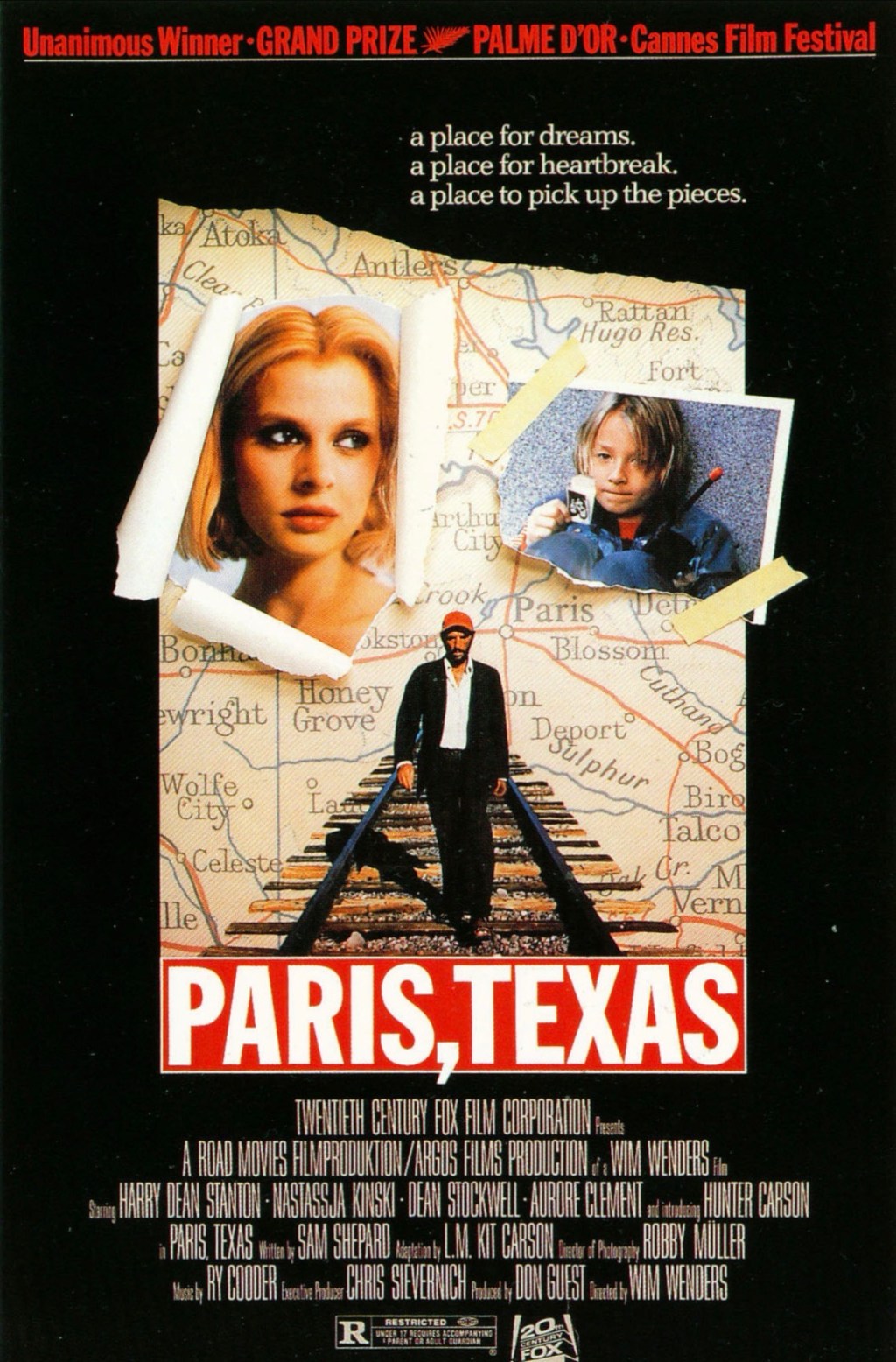
Wim Wenders’ Paris, Texas (1984) is not a film that announces itself through narrative urgency. It does not hook you with twists or forward momentum. Instead, it drifts. It breathes. It waits. In doing so, it becomes one of cinema’s purest demonstrations of mood as meaning—where atmosphere is not decoration, but the emotional language of the film itself.
From its opening image—Travis Henderson wandering silently through the Texas desert, red cap pulled low, face weathered by absence—the film establishes a tone of quiet desolation. The land stretches endlessly, swallowing him whole. This is not the mythic West of conquest or freedom, but a spiritual wasteland, an emotional afterimage. Ry Cooder’s slide guitar enters like a ghost, its bluesy lament echoing the ache of a man who has lost not only his family, but his place in the world.
Wenders understands that mood is born from restraint. Travis speaks almost not at all for the film’s first act. Silence becomes character. Each unspoken moment allows the viewer to sit with his alienation rather than be guided through it. We are not told what he has done, or why he left. We feel the weight of it before we understand it. This withholding is crucial. Paris, Texas does not ask us to judge Travis—it asks us to inhabit his emptiness.
The film’s visual language reinforces this emotional stasis. Robby Müller’s cinematography frames people as small within their environments, dwarfed by highways, billboards, and open skies. America appears both vast and impersonal, a country built for movement but ill-equipped for intimacy. Neon signs glow in the background like artificial suns, offering warmth but no comfort. Even domestic spaces feel provisional, as though they might dissolve at any moment.
Color plays a vital role in shaping the film’s mood. Reds, blues, and muted earth tones dominate the frame, often clashing rather than harmonizing. Jane’s world—when she finally appears—is bathed in artificial blues and pinks, colors of desire and distance. She exists behind glass, literally separated from human touch. The famous peep-show sequence is not shot for titillation, but for emotional excavation. The glass between Travis and Jane becomes the film’s defining metaphor: intimacy without contact, confession without consequence, love refracted through shame.
What makes Paris, Texas remarkable is how it treats memory as something physical. The past is not a series of flashbacks or narrative reveals—it lingers in posture, in pauses, in the way Travis struggles to look at his son. Hunter is not merely a child; he is a living reminder of what Travis abandoned. Their growing bond is rendered through routine rather than drama—shared walks, mirrored gestures, quiet glances. Mood here is built through repetition, not escalation.
When Travis finally speaks—when he recounts the story of his jealousy and self-destruction—it arrives not as a climax, but as a release. His monologue is devastating precisely because it is understated. He speaks calmly, as though narrating someone else’s life. The mood shifts not through music or editing, but through emotional clarity. For once, the film allows articulation—but only after it has taught us how to listen.
Crucially, Paris, Texas refuses the comfort of resolution. Travis does not reclaim his family. He orchestrates their reunion, then disappears once more. This is not an act of redemption, but of acceptance. The film understands that some wounds do not heal—they simply stop bleeding. Mood, once again, does the work that plot typically would. We are left not with answers, but with a feeling: a quiet, lingering melancholy tempered by grace.
In the end, Paris, Texas is a masterclass in how cinema can communicate inner life without explanation. It trusts images over dialogue, atmosphere over incident, and silence over spectacle. Wenders shows us that mood is not the absence of story—it is story, distilled to its emotional essence. Long after the final frame fades, what remains is not what happened, but how it felt. And that feeling—lonely, tender, unresolved—is where Paris, Texas lives forever.


 Four Time Film School Dropout
Leave a comment