By: Dominic La-Viola
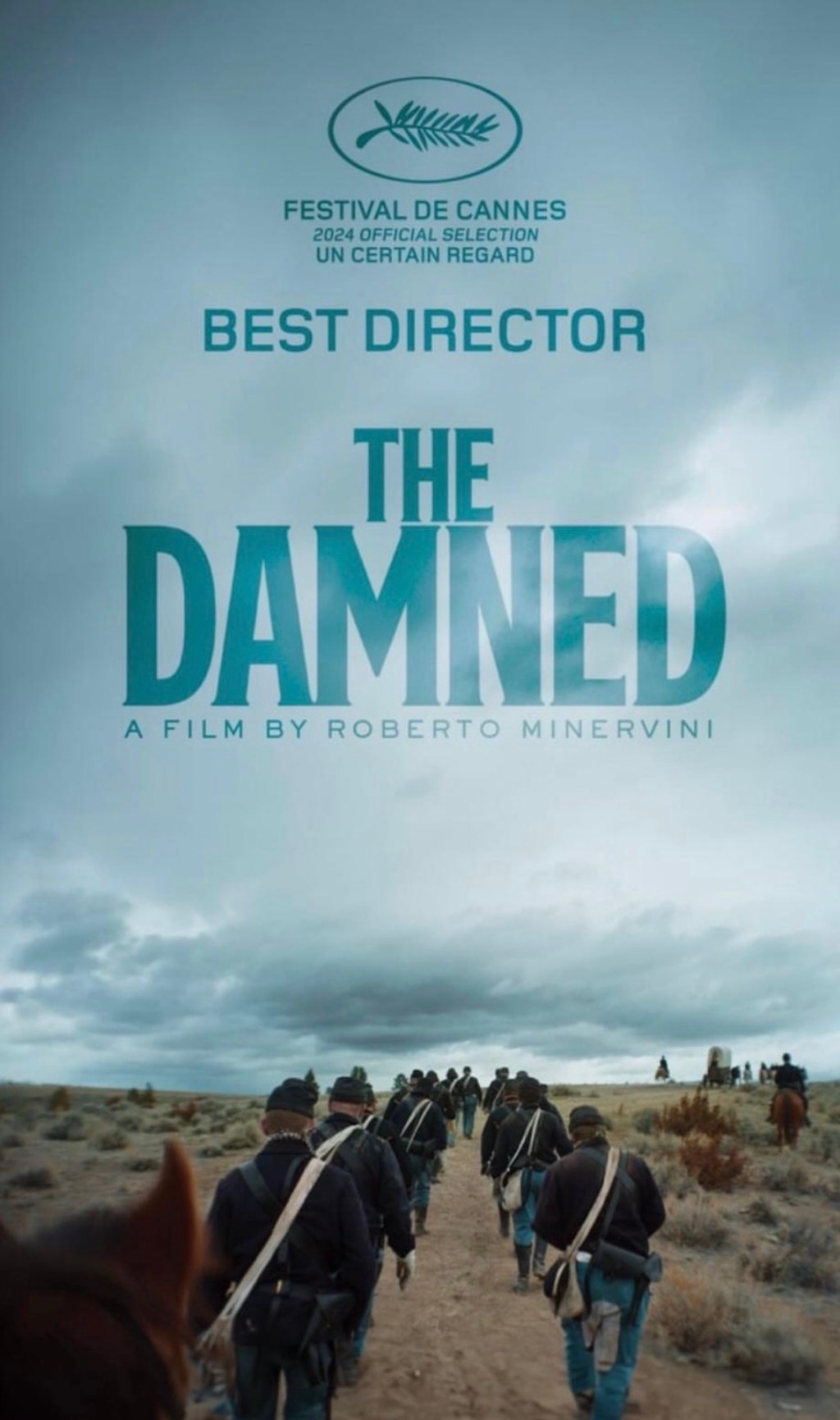
Roberto Minervini makes his fictional feature debut with The Damned, a Civil War drama captured in such a way that it feels closer to a documentary than a traditional narrative film. Leaning heavily into his background and expertise in nonfiction filmmaking, Minervini is able to tell a story that feels otherwise impossible, positioning the viewer as a quiet third-party observer.
Minervini’s vision is clear from the opening sequence, even if it initially feels unclear or out of place. The film opens on a wide shot of two wolves eating a dead deer—no attack, no hunt, just the image of animals feeding. After what feels like several minutes (though in reality it’s likely far less), the camera cuts to a close-up, allowing us to observe the wolf in its natural habitat as others slowly join in.
At first, the image feels odd, even irrelevant, to a story about men at war. As the film unfolds, however, it becomes clear that the wolves represent something philosophical rather than literal. The opening tells us everything we need to know about the film before it truly begins.
It’s a brave and bold choice—to open a war film not with violence or spectacle, but with animals eating their dinner. A moment that would likely turn most viewers away almost instantly. Yet it also acts as a quiet filter, keeping only those willing to be patient, while subtly revealing the film’s central truth long before it announces itself.
While The Damned is a narrative film, it plays out like a documentary—one that captures not just the Civil War, but the nature of war itself. Minervini doesn’t make a war film so much as he creates a character-driven drama set against the backdrop of war, allowing us to simply tag along as observers.
Much like Richard Linklater’s Slacker, the camera is not a narrator. It merely follows those who are. We watch, we listen, and we observe. Like the wolves in the opening shot, we are never meant to know exactly what happened or how it happened—only to witness it unfold without context or explanation.
This is a risky approach, especially for a filmmaker making his fictional debut. It’s the kind of method that can easily come off as pretentious or self-indulgent. But Minervini fully commits, swinging for the fences and creating something genuinely singular. His background in documentary filmmaking clearly strengthens his ability to execute this vision with confidence and restraint.
Knowing this was his first fictional feature, and that his previous work was rooted entirely in documentary, it was difficult to know what to expect going in. What’s surprising is not just the film’s control, but its striking cinematography. The images are crisp, composed, and beautiful—not merely capturing the story, but actively deepening it.
Carlos Alfonso Corral’s cinematography is remarkable. From the balanced compositions to the selective use of shallow depth of field, every visual choice feels intentional. What makes this technique especially effective is its restraint. Used sparingly and only at key moments, it enhances the emotional weight of the scene rather than calling attention to itself.
That level of discipline—knowing when not to use such a powerful visual tool—reveals a clear artistic vision. The film never allows visual flourish to overpower character or tone. Everything serves the story.
Minervini also pens the script, and its influence is undeniable. There is no traditional narrative structure here. Instead, we watch these men exist in their day-to-day lives as soldiers. The dialogue isn’t designed to move plot forward or explain motivation—it simply exists.
The conversations feel natural and unforced. These men speak the way coworkers do, especially coworkers who barely know one another. With few exceptions, these soldiers are strangers, and their interactions reflect that unfamiliarity.
What makes the script so effective is its simplicity and timelessness. There’s little dialogue that feels bound to a specific era or genre. Its restraint mirrors the film itself, allowing meaning to emerge organically rather than being imposed.
Action is scarce, but when it arrives, it lands with weight. For a film set during the Civil War, there is far less gunplay than expected. Yet this absence only heightens its impact. When the first shot is fired, you feel it—not because of aggressive sound design, but because of the silence and stillness that preceded it.
The film captures what war likely feels like most of the time: long stretches of waiting punctuated by brief, terrifying moments of danger. Those moments are intense and disorienting, shot in a way that feels raw rather than cinematic. The result is something both visually striking and emotionally grounded, reinforcing the film’s documentary sensibility.
By the time the credits roll, The Damned—a film without a conventional narrative—ends in a way only a character-driven story can. It leaves you with more questions than answers, yet somehow feels complete. Not because it explains itself, but because it trusts the viewer to sit with what remains.


 Four Time Film School Dropout
Leave a comment